



Creativity and focus are often treated like opposites, as if a child must choose between free imagination and steady concentration. In reality, they strengthen each other: imaginative thinking gives attention a purpose, and attention gives ideas a clear shape. When adults build supportive conditions instead of pushing constant performance, children learn to explore with confidence and stay with a task long enough to feel genuine pride in what they’ve made.
Designing an Environment That Supports Concentration
A child’s attention settles more easily when the space feels predictable and inviting. Keep shelves low, materials visible, and choices limited so children don’t burn energy deciding what to do. A calm room also signals that work matters, so children naturally slow down and engage longer. Many families borrow cues from Chitrakoota Montessori School in Vijayanagar, Bangalore, to create a simplified home setup that encourages deeper play and more independent follow-through.
Guiding Without Interrupting the Flow
Children concentrate best when they feel ownership of the task. Adults can protect that focus by avoiding frequent corrections and replacing them with brief, calm reminders. Transitions should be gentle and consistent, because sudden changes can break attention and increase resistance. If you’re choosing a school, take a moment to visit Chitrakoota Montessori School in Vijayanagar Bangalore, and notice how educators redirect quietly, then use that observation as a call to action to select a place that respects a child’s natural rhythm.
Sparking Imagination With Open-Ended Materials
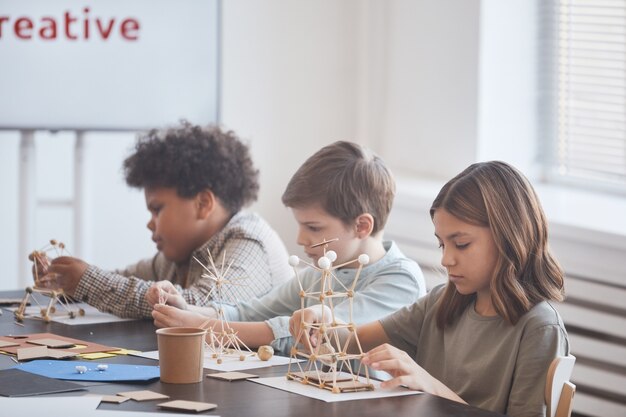
Creativity grows when children can transform ordinary objects into many possibilities. Blocks, loose parts, art supplies, and recycled materials invite experimentation without the pressure of a single correct result. When the materials are flexible, children practice decision-making, planning, and revision. Over time, this kind of play builds both original thinking and the patience needed to continue working even after an idea changes.
Turning Curiosity Into Meaningful Projects
Most projects begin with a tiny question: why something happens, how something works, or what might happen if a child tries a new approach. Adults can help by offering small tools, paper for sketches, a jar for safe collections, or a simple checklist for steps. The important part is time: children need space to return to an idea across days. That return builds stamina and helps them experience learning as a process, not a quick performance.
Building Steady Rhythms That Keep Children Calm
Routines reduce mental clutter and make it easier to begin. The day doesn’t need to be strict, but it should have anchors such as a consistent start, a dedicated work period, and a predictable wind-down. With steady rhythms, children spend less energy negotiating what comes next and more energy creating, testing, and finishing. Calm routines also make it easier for children to handle small frustrations without giving up quickly.
Supporting Skill Development With Purpose
Children need repetition to grow, but they engage more deeply when practice feels useful. Instead of drills that feel disconnected, link skills to daily life: counting to set up snack plates, writing signs for pretend play, or measuring ingredients for cooking. This supports academic growth standards while keeping joy at the center of learning. When children see a reason for the skill, they’re more willing to persist and improve.

Managing Distractions and Strengthening Self-Control
Focus is a trainable skill, not something a child either has or doesn’t have. Reduce background noise, limit screen competition, and keep a consistent place where supplies live so children can restart quickly. When attention drifts, offer a simple choice: return to the current activity or switch intentionally to another one. That teaches awareness and responsibility, which are more lasting than adult-driven control.
Balancing Freedom and Boundaries
Too many rules can flatten creativity, yet no boundaries can turn a workspace into chaos. Children do best with freedom inside a learning structure that is easy to understand: safety limits, respectful words, and caring for materials. When limits are clear and consistent, children feel secure enough to take creative risks. This balance also supports social development, because children learn independence without losing consideration for others.
Conclusion
Encouraging creativity and focus in young learners comes down to shaping the right conditions: calm spaces, meaningful choices, patient adults, and routines that make work feel safe and doable. When children are trusted to explore and supported to persist, they develop both imaginative courage and the ability to stay with their ideas. These habits don’t just help in early childhood; they become a foundation for lifelong learning and confident problem-solving, especially when adults model reflection and patience. One simple way to deepen this impact is to build a habit of gentle feedback: describe what you notice, ask what the child plans next, and then step back. Small moments of respectful attention teach children that their effort matters, and that growth comes from returning, adjusting, and trying again.